
What are UAP
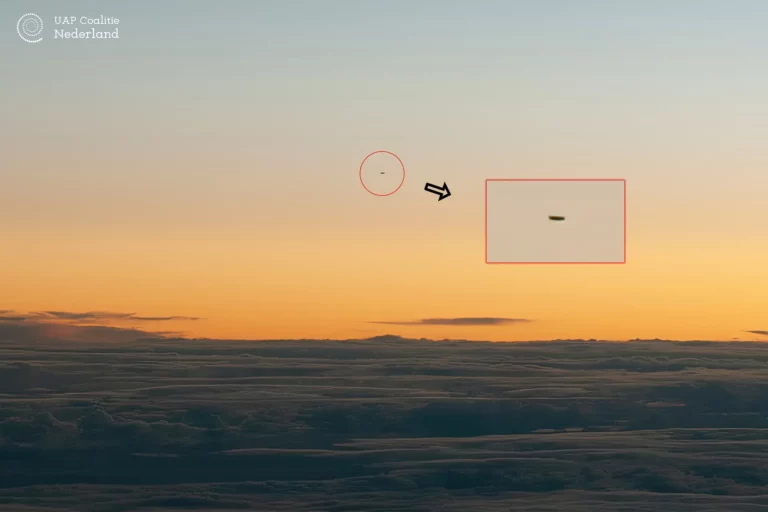
Unidentified Anomalous Phenomena (UAP) are observations of objects or phenomena in space, the air, on land, or at sea that cannot be directly identified. UAP frequently exhibit characteristics that cannot be directly explained by civil or military authorities based on the available data.
In the past, the term Unidentified Flying Object (UFO) was used, but when improved sensor systems began to detect more phenomena in other domains (particularly the sea), a new acronym and a new definition were adopted.
The 5 unique features of UAP
To determine whether an observation is actually categorized as a UAP, international experts use a specific scientific matrix. In this context, researchers and analysts refer to “The Five Observables”.
When an object or phenomenon exhibits at least one of these five advanced flight or physical characteristics and cannot be immediately identified by civil or military authorities, it is officially registered as a UAP:
1. Positive Lift
The ability of an object to fly, hover, or maneuver in the air without visible aerodynamic aids (such as wings or rotors) or recognizable propulsion systems (such as jet engines or exhaust gases).
2. Instantaneous acceleration
The ability to achieve an extreme speed from a standstill or a constant speed in a fraction of a second, or conversely to come to an abrupt and complete stop. These extreme forces exceed the physical limits of known human aircraft and human physiology.
3. Hypersonic speed without external features
The ability to travel at hypersonic speeds — faster than five times the speed of sound (over 6,175 km/h). What makes this unique is that it occurs without the usual physical side effects, such as an audible sound barrier (sonic boom) or visible heat acceleration and friction in the atmosphere.
4. Trans-medium movements
The unique ability of the phenomenon to move seamlessly and without noticeable loss of speed through different media. A trans-medium object can move successively through space, the Earth's atmosphere, and underwater.
5. Low visibility
The ability to remain partially or completely invisible to human perception and advanced sensor systems. This characteristic often manifests itself in an object being detected via infrared (such as SWIR cameras) or military radar but invisible to the naked eye, or vice versa.
Theories and International Research on UAP
There are many UAP theories, ranging from natural phenomena to yet unknown technologies.
No scientific evidence for extraterrestrial UAP
Although rumors of UAP origins circulate, there is no scientific evidence that these phenomena are unnatural.
Several countries are actively conducting UAP research:
– United States (AARO) (Department of War)
– Canada
- Germany (University of Würzburg & Luftfahrt-Bundesamt)
- France (GEIPAN)
– Italy (GSD)
– Japan, Argentina, Uruguay, Chile, Russia, China
Why the Netherlands and the EU UAP need research
– Safety of the Netherlands and the European Union
– Technological innovation
– Economic growth driven by new insights